
Korean Cultural Centre UK Celebrates Hangeul Day with Special Calligraphy Workshop and Historical Lecture
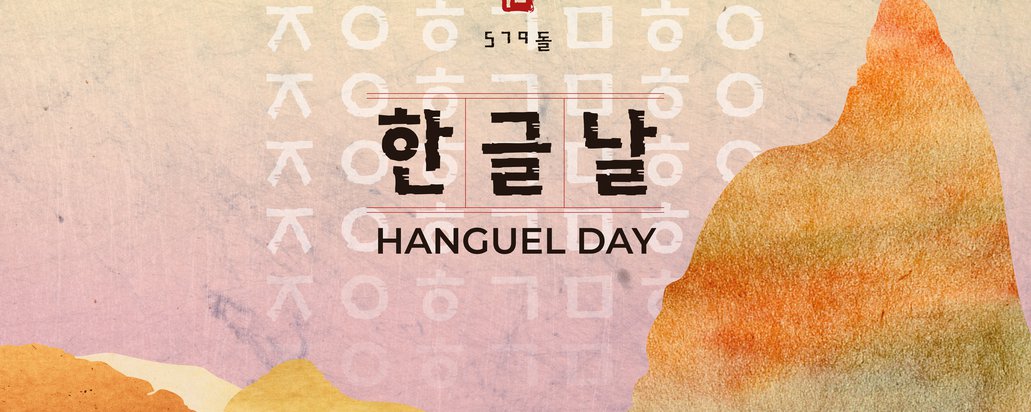
To commemorate Hangeul Day, the Korean Cultural Centre UK (KCCUK) organised a series of special programmes designed to highlight the spirit behind the creation of Hangeul, celebrate its aesthetic beauty, and promote Korean language and culture to wider UK audiences. As part of this initiative, the Hangeul Calligraphy Workshop took place on Tuesday 7 October, followed by a historical lecture on the creation of Hangeul by King Sejong on Wednesday 8 October.
Dr Seunghye Sun, Director of the Korean Cultural Centre UK, emphasised the significance of the programme: “Hangeul is a cultural heritage for a new era, created to help individuals express their own thoughts and intentions. This ‘power to articulate meaning’ is also the foundation of Korean aesthetics. By writing Hangeul together with K-culture fans in the UK and exploring its history through a dedicated lecture, we hope to share its beauty and build a new cultural legacy shaped by the meanings we express through Hangeul.
In particular, the British Museum’s upcoming event—bringing together specialists in Hangeul, cuneiform and Greek inscriptions—offered a profound opportunity to discuss why humans write. It highlighted the significance of Hangeul as a writing system within the broader context of world civilisations.
Hangeul Calligraphy Workshop (7 October, 6pm)
The Hangeul Calligraphy Workshop was held at the Korean Cultural Centre UK at 6pm (local time) on 7 October. Participants had the chance to write Hangeul using brushes and pens, created their names in Korean, and experienced the distinctive visual harmony and structure of the script.
The workshop was designed for participants of all ages and backgrounds, offering an accessible, enjoyable introduction to the Korean writing system and deepening interest in the Korean language.
Lecture: “King Sejong and the Creation of Hangeul” (8 October, 6pm)
The following evening, on 8 October at 6pm, the KCCUK hosted a historical lecture on “King Sejong and the Creation of Hangeul.” The session explored the historical background, linguistic principles, and cultural significance behind the invention of Hangeul. Participants gained insight into the social and cultural conditions that led to the development of the script, as well as its scientific design and global cultural value today.
The lecture served as an opportunity to introduce Korea’s linguistic heritage in a wider international context, reaffirming the contemporary relevance of Hangeul on the occasion of Hangeul Day.
British Museum Special Event (24 October):“Why We Write: Writing Systems and Human Stories”
To further mark Hangeul Day, the British Museum hosted a special event on 24 October titled “Why We Write: Writing Systems and Human Stories.”
The panel featured:
- Professor Anders Karlsson(SOAS University of London), specialist in Korean history and Hangeul
- Dr Irving Finkel, curator of Middle Eastern Mesopotamia at the British Museum and a leading authority on cuneiform
- Professor Stephen Colvin(UCL), expert in Greek epigraphy
- Moderated by Dr Seulbi Lee, Hangeul specialist at Birkbeck, University of London
The event explored the origins of writing systems, the cultural significance of scripts, and the question of why humans write — offering a rich comparative perspective across civilisations.
Supported by the Ministry of Culture, Sports and Tourism’s Overseas Korean Galleries Programme, the event received an exceptional response, with tickets fully booked a month in advance.
Through these programmes, the Korean Cultural Centre UK aims to deepen understanding of the Korean language, celebrate the unique cultural value of Hangeul, and share its historical and aesthetic significance with audiences in the UK and beyond.